Your Cycle Forecast: The Four Phases of the Menstrual Cycle, Explained Simply
What if your cycle came with a weather forecast?
It is a playful way to describe something real. The menstrual cycle is usually described in four phases, and many people notice that their energy, mood and appetite shift as they move through them. Here is a simple guide to each phase, in forecast form.
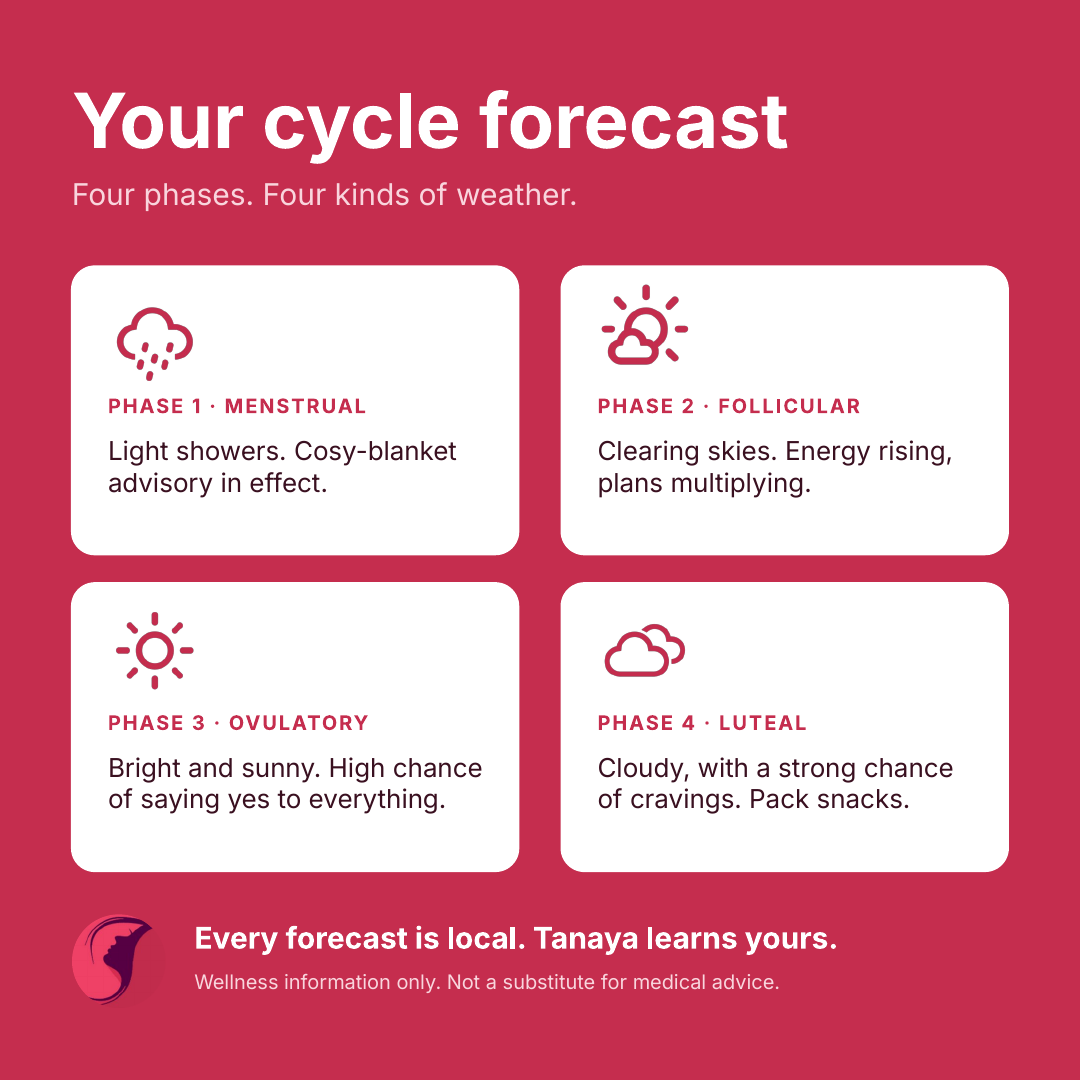
Phase 1: Menstrual
Forecast: light showers, cosy-blanket advisory in effect.
The cycle begins on the first day of your period. Hormone levels are at their lowest in this phase, and many people feel more tired or want more rest than usual. Some also notice cramps or lower energy. Gentle movement, warm food and a slower pace often feel right here, but listen to what your body asks for.
Phase 2: Follicular
Forecast: clearing skies, energy rising, plans multiplying.
After your period, the body prepares to release an egg. Many people describe this as a time when energy and motivation start to return. It can be a good moment for new plans, harder workouts or tasks that need focus, if that matches how you feel.
Phase 3: Ovulatory
Forecast: bright and sunny, with a high chance of saying yes to everything.
Around the middle of the cycle, an egg is released. This phase is short, often just a few days. Many people feel at their most social and confident here. Others notice little difference at all, which is completely normal too.
Phase 4: Luteal
Forecast: cloudy, with a strong chance of cravings. Pack snacks.
The final phase runs from ovulation until your next period. Toward the end of it, some people notice cravings, bloating, changes in mood or lower energy. Planning a lighter week, keeping good snacks within reach and getting enough sleep can make this stretch easier.
Every forecast is local
Weather is different in every city, and cycles are different for every person. Cycle length, the length of each phase and how each one feels all vary from person to person, and often from month to month for the same person. The textbook picture is an average, not a rule.
That is why the most useful forecast is your own. When you note your cycle, symptoms and moods over a few months, patterns start to appear: the week you usually feel most energetic, the days you tend to want more rest. Knowing your pattern makes it easier to plan your week, and easier to describe any changes to a doctor.
How Tanaya helps
Tanaya is a women's wellness companion that helps you track your cycle with AI-assisted predictions and reminders, log symptoms and moods, and see your own patterns over time. Each month it turns your notes into a wellness summary you can share with a doctor, and you can book a consultation with a certified gynecologist from inside the app. It is available in eight languages.
Get Tanaya on Google Play: https://play.google.com/store/apps/details?id=com.systemonsilicon.tanayahealth
If something in your cycle feels new, painful or worrying, talk to a doctor rather than waiting it out.
Tanaya is a wellness information app and does not provide medical advice. The content in this article is for general information only and is not a substitute for professional medical advice, diagnosis or treatment.